Dogs7 min
Dog Vomiting & Diarrhea: Causes, Symptoms & When to See a Vet
Published on: Apr 22, 2026
Dog Vomiting & Diarrhea: The Most Common Reason Pet Owners Visit the Vet
One of the top reasons dog owners seek veterinary care is vomiting and diarrhea. These symptoms can range from minor stomach upset to life-threatening emergencies. Knowing the difference between "wait and see" and "rush to the vet" could save your dog's life.
Common Causes
Less Serious (Often Resolves on Its Own):
- Dietary indiscretion: Eating human food, spoiled food, sudden diet changes
- Eating too fast: Especially in large breeds who may vomit undigested food
- Stress: Moving homes, travel, or new pets can cause temporary stomach upset
- Motion sickness: Common in puppies unfamiliar with car rides
Serious Causes (Requires Veterinary Care):
- Parvovirus: Extremely dangerous, especially in unvaccinated puppies. Causes severe vomiting, bloody diarrhea, and lethargy.
- Canine Distemper: Fever, nasal discharge, diarrhea, and neurological symptoms.
- Intestinal Obstruction: Swallowed toys, socks, rocks, or bones blocking the intestines.
- Pancreatitis: Often after eating fatty foods. Causes vomiting, abdominal pain, and appetite loss.
- Intestinal Parasites: Especially roundworms in puppies, causing bloating and diarrhea.
- Toxin Ingestion: Insecticides, chemicals, chocolate, grapes, onions.
Emergency Warning Signs 🚨
- Bloody vomit or diarrhea (bright red or dark coffee-ground appearance)
- Vomiting more than 3-4 times in one day
- Diarrhea lasting more than 24-48 hours
- Complete refusal of food and water for over 12-24 hours
- Extreme lethargy, refusal to walk, or collapse
- Distended, painful abdomen
- Fever (dry, hot nose; body feels abnormally warm)
- Unvaccinated puppies — seek care immediately at the first sign of frequent vomiting
Home Care for Mild Cases
- Fast for 6-12 hours to rest the stomach, but still offer small sips of clean water.
- Start a bland diet: Plain boiled chicken breast mixed with white rice, in small frequent meals.
- Document symptoms: Take photos of vomit and stool (color, amount, blood, mucus) to show your vet.
- Do NOT self-medicate: Human anti-diarrheal or anti-nausea drugs can be harmful. Always consult your vet first.
- Monitor energy levels: If your dog stays playful and drinks water, observation may suffice. If lethargy sets in, visit the vet promptly.
What Happens at the Vet?
When you arrive, the veterinarian will:
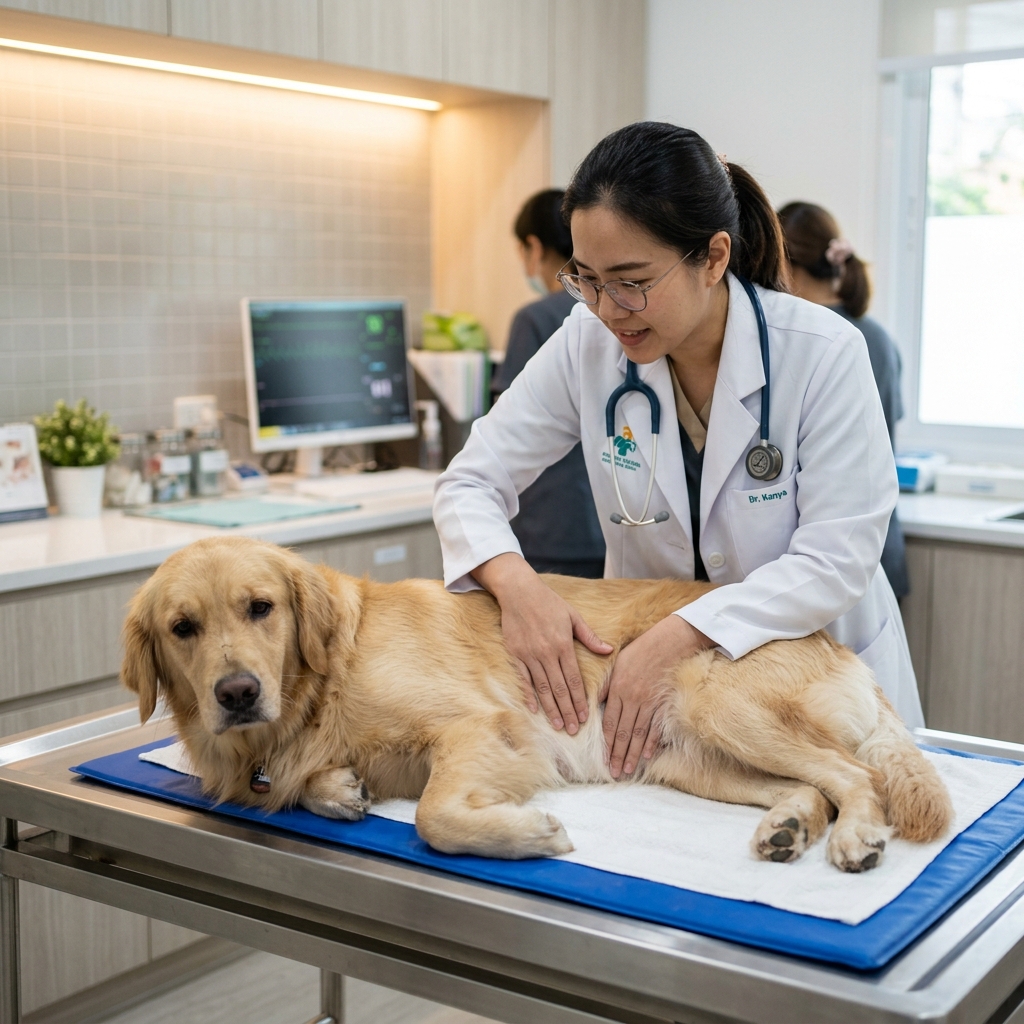
- Physical exam: Palpation of the abdomen, listening to gut sounds, temperature check.
- Blood work: To assess dehydration, kidney function, liver values, and inflammation markers.
- X-ray or ultrasound: If a foreign body obstruction is suspected.
- IV fluid therapy: To correct dehydration.
- Fecal exam: To test for parasites, bacteria, or viruses (e.g., Parvo snap test).
How to Prevent Vomiting & Diarrhea:
- Complete the full vaccination program, especially the combo vaccine (Parvo protection).
- Deworm regularly, every 3-6 months.
- Avoid feeding human foods with spices, fats, onion, garlic, or chocolate.
- Transition to new foods gradually (mix 25% new food per day).
- Keep small toys, chemicals, and medications out of your pet's reach.
Makhamtia Animal Hospital treats gastrointestinal issues in dogs every day, no holidays, from 08:00-21:00. If your dog won't stop vomiting or has persistent diarrhea, don't wait — bring them in. Call 077-935-414 or 095-418-1528.
👨⚕️
Written by Veterinary Team
Makhamtia Animal Hospital