Dog Hit by Car: Emergency First Aid & What to Do Immediately
Published on: Apr 22, 2026
Dog Hit by Car: Every Second Counts
Traffic accidents are one of the leading causes of severe injury and death in pets, especially in semi-rural areas of Surat Thani where dogs often roam freely. When an accident happens, panic can lead to poor decisions. This guide will help you know exactly what to do — step by step — to give your dog the best chance of survival.
What to Do Immediately After a Pet Traffic Accident
Step 1: Stay Calm and Ensure Safety 🚨
- Stay clear of traffic and protect yourself from danger first.
- Beware of bites: An injured dog may bite even its owner. If possible, gently muzzle using a soft cloth (EXCEPT if the dog has difficulty breathing or is vomiting).
Step 2: Assess the Dog's Condition
- Is the dog conscious? Does it respond to your voice?
- Is it breathing normally? Watch the chest for regular rise and fall.
- Is there visible bleeding? Apply firm pressure with a clean cloth (pressure bandage).
- Is a limb deformed or at an odd angle? This signals a fracture — do NOT attempt to straighten it.
Step 3: Safe Transportation
- Small to medium dogs: Carefully lift the pet with one hand supporting the chest and the other supporting the hips. Try to keep the spine aligned.
- Large dogs: Use a blanket, board, or rigid surface as a makeshift stretcher to prevent spinal movement.
- NEVER drag or pull by a leg — this can worsen injuries significantly.
Step 4: Call the Vet Hospital Immediately
- Call ahead so the hospital can prepare an emergency team. Tell them "dog hit by car" and the approximate time of the incident.
- No vehicle available? Contact Makhamtia Animal Hospital — we offer pet ambulance service within the Surat Thani area.
Common Injuries from Traffic Accidents
| Injury Type | Observable Signs | Severity | | :--- | :--- | :--- | | Bone Fracture | Swelling, deformity, non-weight bearing, crying in pain | High | | Pelvic Fracture | Inability to walk, dragging hind legs, unable to urinate | Very High | | Internal Bleeding | Pale gums, rapid breathing, distended abdomen, extreme lethargy | Critical — Emergency | | Head Trauma | Disorientation, unequal pupil sizes, seizures, loss of consciousness | Critical — Emergency | | Collapsed Lung (Pneumothorax) | Labored breathing, blue or dark gums | Critical — Emergency | | Lacerations / Road Rash | Bleeding, exposed tissue, embedded debris | Moderate to High |
What NOT to Do ❌
- Never give human painkillers — especially paracetamol/acetaminophen and ibuprofen, which are severely toxic to dogs.
- Don't clean wounds with alcohol or undiluted antiseptic. Use saline or clean water instead.
- Don't manipulate or attempt to set broken limbs — this can cause bone fragments to damage blood vessels or nerves.
- Don't feed or give water before the vet visit — if surgery is needed, a full stomach poses anesthesia risks.
Treatment at the Veterinary Hospital
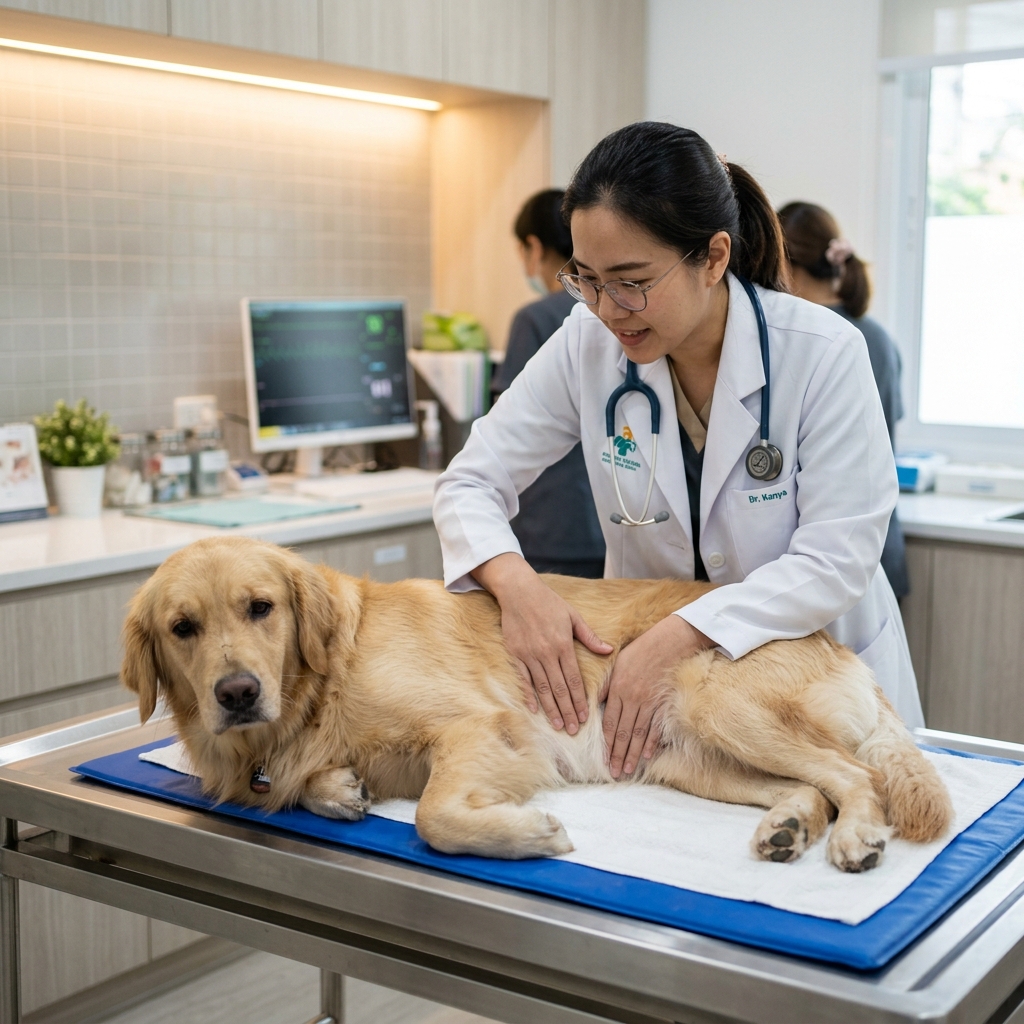
Once at the hospital, the injured pet will be treated in order of priority:
- Stabilize: Oxygen support, IV fluids, pain management, and hemorrhage control as needed.
- Diagnostics: X-rays for fracture mapping, ultrasound for internal bleeding, blood work for organ assessment.
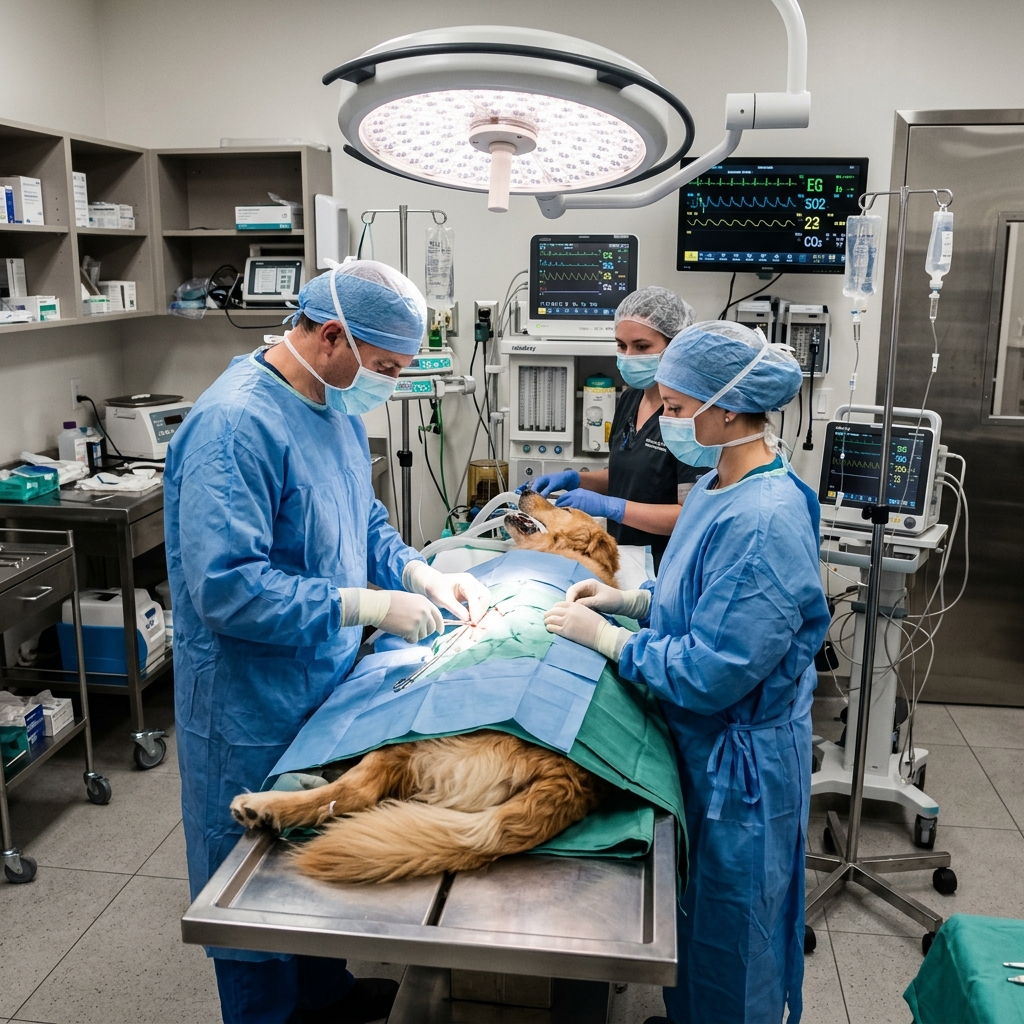
- Surgery: If indicated — orthopedic fracture repair (ORIF), internal organ repair, laceration closure.
Makhamtia Animal Hospital specializes in Orthopedic Surgery with over 22 years of experience, equipped with Digital X-ray and a standard surgical suite. We accept emergency trauma cases for dogs and cats every day from 08:00-21:00, no holidays.
Accident Prevention
- Always use a leash when walking your dog outside.
- Secure your property — don't let dogs roam unsupervised outside.
- Teach recall commands ("come" and "stop") for instant obedience.
- Use reflective collars for pets who are walked during low-light hours.
For emergencies, call us immediately: 077-935-414 or 095-418-1528.
Written by Veterinary Team
Makhamtia Animal Hospital